Dr. David Demers
  • Home
  • Falling Behind
  • Author
  • Ghostwriter
  • Real Estate
  • Demers v Austin
  • Homes Beat Stocks
  • Speaker Topics
  • Captain Carole
  • Contact Dr Dave
  • Homes Beat Stocks
  • Wealth Gaps Will Soar
  • US Faces Economic Catastrophe
  • Cut Taxes
  • Reagan Legacy
  • Debt Stems from
  • Greed
  • Stupid
  • Radical Right
  • Violence
  • Chart
  • Income Gap
  • American Dream
  • Talk About Gaps
  • Bifurcation
  • Dear Rich People
  • Letter to Kamala
  • Excuse Me
  • Nobel Prize
  • Pitchforks
  • Serf
  • stories
  • Runaway
  • blame
  • elephant
  • tipping point
  • Reagan
  • mortgaging
  • court
  • Rock Concerts
  • Objectivity
  • Train Book
  • Vitae
  • Enlightenment
Dr. Demers (see biography on HOME page) offers ghostwriting services to executives and individuals who seek to promote their ideas or would like to pen a legacy memoir.

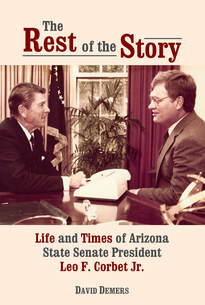
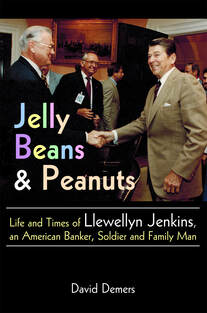
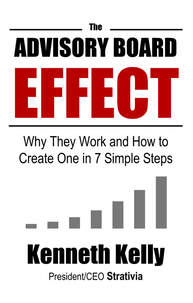
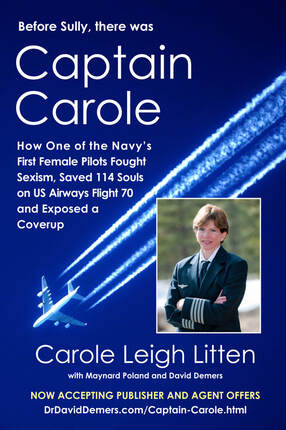
He has ghostwritten seven books, five of which are depicted below (writing samples are below [footnotes and references excluded]). The other two books are in press. (Note: The ABCs of Buying Rental Property has been updated with a new cover at Amazon Books.)

His fees are reasonable (typically $25-$30 per hour), and you don't pay until you're satisfied with the first chapter or part of your book or presentation. Call 623 363 4668 or email [email protected] for a free consultation.
Picture

Chapter 1
Fire in the Sky


10:20 a.m, Sunday, June 11, 2000
US Airways Flight 70
San Francisco to Philadelphia
Over the California-Nevada border

    My copilot, Arnie, had just leveled our Airbus 319 to a cruising altitude 37,000 feet in a serene powder-blue sky when an alarm screeches and a red master switch flashes a warning message that the aft cargo compartment is on fire.
    We glance at each other.
    Is the warning light malfunctioning or is there a fire?


    We have no access to the cargo area and it has no cameras.
    We pitch our breakfast trays to the flight deck behind us, reach down on the outside of our seats, and extract and don our full face oxygen masks. My thoughts drift to the flash fires that brought down ValuJet and Swiss Air airliners several years earlier. All 339 passengers and crew aboard those two flights died. At this altitude, we would need at least 15 minutes to land the plane. A fire can do a lot of damage in that time.
    From the captain’s seat on the left side, I swiftly raise my right hand and press an

               
Click here to continue reading
Picture
Picture
Picture
Picture
Chapter 2
Why Real Estate Is a
Superior Investment


    There are lots of ways to financial freedom.
    The fastest and easiest is to be born to rich parents.
    About half of the wealth in America comes through inheritance.
    But if you, like me, weren’t lucky enough to be born to rich parents, don’t despair. We have other paths to financial freedom. We can climb (or should I say “claw”) our way up the corporate ladder; invest in stocks or bonds or mutual funds; write a best-selling novel; start up a business; fix up homes; or win the lottery.
    Earning a top executive position in a corporation is prestigious but usually takes a long time. Stocks can be volatile. Bonds, annuities and mutual funds often offer less than satisfactory returns. Writing a novel is hard work and only a few books make the New York Times best-selling list. Starting a new business is exciting but two-thirds of them fail, often leaving their owners bankrupt. Fixing up homes can be lucrative, but it’s a lot of hard work and your profits are heavily taxed. And the lottery — well, your odds of striking it big are 1,800 times less than being killed by lightning.
    Each “wealth stream” has advantages over the others. (Lottery tickets are cheap, after all.)
    But none has a better track record than real estate.
    And to prove it, I’ll first compare real estate to stock investments. Then I’ll elaborate on 10 financial reasons why real estate is financially superior to stocks and most other forms of investment.

Copyright Ken McElroy

Chapter 1
Blue Mobsters


    Mafioso Anthony “Tony” Vincent was peeved.
    Arizona state Senator Leo F. Corbet Jr. was late for a 4:30 meeting at Marie Callender’s in Phoenix, at which Tony and state representative Don Kenney would try to persuade Corbet to back legislation legalizing gambling in the state. To seal the deal, Tony intended to bribe Leo, president of the Senate, like he had already done with Don.
    It was October 8, 1990.
    To pass the time, Don told Tony about his hemorrhoid problem and joked about it. “About once every six months, I have a little ... problem and it’s been bothering me the last couple of days. Us assholes got to stick together.”
    Don’s joke would turn out to be prophetic.
    But the 53-year-old mobster-sized Tony — six-foot-three, 250 pounds — wasn’t amused.
    He was there to do business. He had $37,000 in cash on him.
    And Leo, who didn’t know Tony was a convicted felon and mobster, could have all of it.
    Tony was relieved when Don changed topics and began talking about Leo. Don assured Tony that Leo would be an easy target. He wasn’t a rich man. Ten thousand bucks would be a lot of money to Leo, Don said. Later, he boasted to undercover detectives: “[I’m] gonna reel him [Leo] in yet.”
    Leo finally arrived at 4:50.
    The conversation was convivial.
    But Tony thought Leo was  “cautiously arrogant” — an attribution that, ironically, seemed to fit Tony better, especially after Tony told Leo that he had lobbied the Legislature and had secured 18 votes for the gambling bill.
    Leo grinned. Not enough — not even close to get a controversial bill through the Legislature. Leo suggested a statewide public referendum. Let the voters decide.
    Tony didn’t like the sound of that.
    His bribery scheme was now in jeopardy.
    Don quickly intervened, pointing out that he checked out Tony’s credentials with U.S. Senator Harry Reed of Nevada and with members of the Mormon church. Tony could be trusted.
    But Don had no idea what he was talking about. He knew Tony used to work for the mob and had three felony convictions. What Don didn’t know was that Tony wasn’t working for the mob right now and that the $55,000 Don received from Tony in a gym bag wasn’t mob dough: It was taxpayer money. Tony was working as “a special undercover agent” for the Maricopa County Attorney’s office in a sting operation that came to be known as AzScam.
    Tony’s job was to bribe as many legislators and lobbyists as he could. Tony enlisted Don to “quarterback” his undercover scheme — to help him recruit more victims. Tony’s real name was Joseph Stedino — a self-described “slick” and “fast-talking” one-time gangster. One Phoenix attorney called Stedino “a first-class con in the ugliest sense. His motivation was power and greed.”
    Tony, Don and Leo sat and talked about the gambling bill for more than an hour. Tony and Don wanted to introduce the bill on the last day of the legislative session in order to limit public scrutiny. Leo made several calls on Tony’s cell phone. The cops were listening in.
    Tony and Don set up another meeting with Leo for later in the month. Would Leo take the bribe? ...


Copyright Leo F. Corbet


Chapter 1
A Banker’s Dilemma

    
     Llewellyn “Lew” Jenkins and his banker colleagues believed they were in a no-win situation.
    The staff of President Ronald Reagan had invited them in August 1981 to the White House to explain why the prime interest rate — the rate banks use to lend money to the their best business customers — was so high.
    It was 20.5 percent, so high that few businesses were borrowing money. The country was in a recession. Businesses were laying off workers. The unemployment rate was nearly 8 percent.
    The American public and many politicians were angry.
    Some of Reagan’s staff were worried about the political consequences for the President.
    They were looking for a scapegoat, Lew said. They wanted to “jawbone” — to use their authority to pressure the banking industry to take responsibility for the high prime rate.
    Banks seemed like an easy target.
    After all, “Who loves a banker, for Christ’s sake?” Lew said. “This was purely political. This was to make their President look better.”
    But Lew also knew the banks were not responsible.
    The real problem was a tight money supply.
    The prime rate was skyrocketing because Federal Reserve Board Chairman Paul E. Volcker had raised the rates that banks are charged when they borrow money from the Federal Reserve. And Volcker, in turn, was forced to raise the fed rate to combat inflation, which had soared past 14 percent a year earlier and was still double-digit in August 1981. Inflation normally drops when the money supply is tightened.
    Volcker’s plan worked, eventually.
    But the recession and tight money supply were taking a toll on the financial industry. More than 40 lending institutions had failed and more than 500 banks were on the verge of failure.
    Lew was well aware of these problems.
    A year earlier he had been elected President of the American Bankers Association, the most powerful bankers’ association in the world. Lew also was Vice Chairman of Manufacturer’s Hanover Trust Company, the third largest commercial bank in the United States. MHT was located in New York City. Lew oversaw all operations in the United States, with the exception of those in New York state.
    The White House called ABA headquarters and asked if Lew could bring a dozen other bankers from other institutions across the country with him to the meeting.
    “What a great opportunity for the President of the United States to get that commercial banking industry under his thumb,” Lew said. “Give them a lecture; tell them what has to be done — ba, ba, ba. And if the prime rate goes down, it’s because the President told the industry to get that rate down. If it doesn’t go down, then those bastard bankers aren’t cooperating as a nation.”
    Before the meeting, Lew and his colleagues gathered at ABA headquarters, where “it is pointed out that ... there’s no way you can win this situation. You can be as gracious as you can, but you are gonna get whipped.”
    The day arrived.  
    “Now I am walking over to the White House,” Lew said. “I prefer to walk alone. I’m thinking to myself. ‘I don’t get beaten in this way. It’s just not my nature. This is not going to work for them. ... OK, I think I know what I am going to do.’
    “So we walk in and here’s this great big room. ... It’s got a huge, huge oval table and there must be 60 or 70 guys sitting at the table and standing against the walls. ... This is a big show. I go in and I’m told where I should sit. I’m in the middle of this big table. And there is bowl of jelly beans in front of me. The chair across the way, which is where the President is going to sit, has a bigger bowl of jelly beans.”
    Reagan’s favorite candy was jelly beans.
    Sitting next to Lew was Vice President George H. W. Bush, who would be elected President of the United States after Reagan left office. Sen. Pete Domenici, Chairman of the Senate Banking Committee, also was there.
    “This is a powerful room,” Lew said.
    Reagan enters the room.
    Lew had worked with Reagan before.
    “He looks at me, and I look at him, and we know each other,” Lew said. “I say ‘Mr. President,’ and he says, ‘Good to see you.’”
    “And he sits down and, boy, was there silence in that room. And he says, ‘The reason we’re here is to discuss what is bothering all of us — that tremendously high prime interest rate.’”
    Lew was on the hot seat.
    And the wrong words could unleash a barrage of criticism, not just against him but against all banks in the country. He paused before uttering the words: “Mr. President, can we .... ”

Copyright Llewellyn Jenkins
 Step 1
Identify the Problem

                 
     Before the COVID epidemic, Ryder corporation had a big problem. Many of its potential customers didn’t know that it offered supply chain management services. When people think of Ryder, they think of rental trucks. But nearly half of the company’s revenues come from supply chain management.
    “Customers [on our advisory board] told us time and time again, ‘Nobody knows this about you guys. Nobody knows that you do supply chain and logistics,’” Chief Marketing Officer Karen Jones told Marketing Dive in 2020. “We [had] heard that for several years and finally it was time to do something.”
    So the company launched a marketing campaign in summer 2020 titled “Ever Better World of Logistics.” It purchased advertisements on television and in print, display, internet search and other digital formats.
    The results were amazing.
    Within a month, supply chain leads jumped 21 percent.
    Jones conceded that the COVID pandemic and supply chain problems boosted the effectiveness of the campaign. But had the company not listened to its advisory board, it might never have discovered the awareness problem and launched the campaign.
    This is a good example of what I call the Advisory Board Effect — how this form of organization can give your business a competitive edge and help solve problems. ...

Copyright Kenneth Kelly

Proudly powered by Weebly
  • Home
  • Falling Behind
  • Author
  • Ghostwriter
  • Real Estate
  • Demers v Austin
  • Homes Beat Stocks
  • Speaker Topics
  • Captain Carole
  • Contact Dr Dave
  • Homes Beat Stocks
  • Wealth Gaps Will Soar
  • US Faces Economic Catastrophe
  • Cut Taxes
  • Reagan Legacy
  • Debt Stems from
  • Greed
  • Stupid
  • Radical Right
  • Violence
  • Chart
  • Income Gap
  • American Dream
  • Talk About Gaps
  • Bifurcation
  • Dear Rich People
  • Letter to Kamala
  • Excuse Me
  • Nobel Prize
  • Pitchforks
  • Serf
  • stories
  • Runaway
  • blame
  • elephant
  • tipping point
  • Reagan
  • mortgaging
  • court
  • Rock Concerts
  • Objectivity
  • Train Book
  • Vitae
  • Enlightenment